

Benjiweatherley
Add a review FollowOverview
-
Founded Date October 17, 1924
-
Sectors Physical Therapist (PT)
-
Posted Jobs 0
-
Viewed 12
Company Description
What DeepSeek R1 Means-and what It Doesn’t.
Dean W. Ball

Published by The Lawfare Institute
in Cooperation With

On Jan. 20, the Chinese AI business DeepSeek launched a language model called r1, and the AI community (as determined by X, a minimum of) has actually discussed little else considering that. The model is the very first to openly match the performance of OpenAI’s frontier “thinking” model, o1-beating frontier labs Anthropic, Google’s DeepMind, and Meta to the punch. The model matches, or comes close to matching, o1 on criteria like GPQA (graduate-level science and math questions), AIME (a sophisticated math competition), and Codeforces (a coding competition).
What’s more, DeepSeek launched the “weights” of the model (though not the information used to train it) and launched a detailed technical paper revealing much of the methodology required to produce a model of this caliber-a practice of open science that has largely ceased amongst American frontier labs (with the significant exception of Meta). Since Jan. 26, the DeepSeek app had actually risen to primary on the Apple App Store’s list of many downloaded apps, just ahead of ChatGPT and far ahead of rival apps like Gemini and Claude.
Alongside the primary r1 model, DeepSeek released smaller sized variations (“distillations”) that can be run in your area on reasonably well-configured consumer laptop computers (rather than in a big information center). And even for the versions of DeepSeek that run in the cloud, the cost for the largest design is 27 times lower than the cost of OpenAI’s competitor, o1.
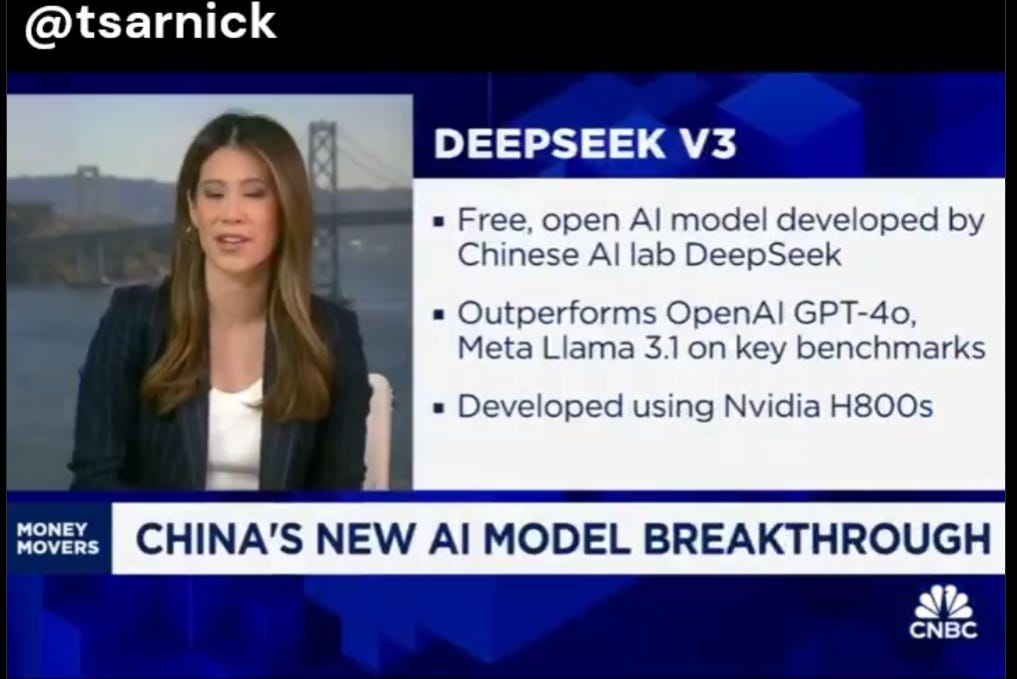
DeepSeek accomplished this task in spite of U.S. export manages on the high-end computing hardware required to train frontier AI designs (graphics processing systems, or GPUs). While we do not know the training expense of r1, DeepSeek claims that the language design used as the foundation for r1, called v3, cost $5.5 million to train. It deserves keeping in mind that this is a measurement of DeepSeek’s limited expense and not the original expense of purchasing the compute, building an information center, and working with a technical staff. Nonetheless, it remains a remarkable figure.
After nearly two-and-a-half years of export controls, some observers expected that Chinese AI companies would be far behind their American counterparts. As such, the new r1 model has analysts and policymakers asking if American export controls have actually failed, if large-scale compute matters at all any longer, if DeepSeek is some type of Chinese espionage or propaganda outlet, or even if America’s lead in AI has actually evaporated. All the unpredictability triggered a broad selloff of tech stocks on Monday, Jan. 27, with AI chipmaker Nvidia’s stock falling 17%.
The answer to these questions is a definitive no, however that does not mean there is absolutely nothing crucial about r1. To be able to think about these concerns, however, it is required to remove the hyperbole and concentrate on the truths.
What Are DeepSeek and r1?
DeepSeek is a quirky business, having actually been established in May 2023 as a spinoff of the Chinese quantitative hedge fund High-Flyer. The fund, like many trading firms, is an advanced user of large-scale AI systems and calculating hardware, utilizing such tools to execute arcane arbitrages in monetary markets. These organizational competencies, it ends up, translate well to training frontier AI systems, even under the tough resource restrictions any Chinese AI firm deals with.
DeepSeek’s research documents and designs have been well related to within the AI community for at least the past year. The company has actually launched detailed documents (itself progressively rare among American frontier AI firms) showing creative techniques of training designs and producing artificial data (information developed by AI models, typically utilized to strengthen model efficiency in particular domains). The business’s consistently high-quality language models have been beloveds amongst fans of open-source AI. Just last month, the company flaunted its third-generation language design, called simply v3, and raised eyebrows with its incredibly low training budget plan of just $5.5 million (compared to training costs of tens or numerous millions for American frontier designs).
But the model that really garnered international attention was r1, one of the so-called reasoners. When OpenAI flaunted its o1 design in September 2024, many observers presumed OpenAI’s advanced approach was years ahead of any foreign rival’s. This, nevertheless, was a mistaken presumption.
The o1 model uses a reinforcement learning algorithm to teach a language model to “believe” for longer durations of time. While OpenAI did not document its methodology in any technical information, all signs point to the breakthrough having been reasonably easy. The standard formula seems this: Take a base model like GPT-4o or Claude 3.5; place it into a reinforcement learning environment where it is rewarded for appropriate responses to complicated coding, scientific, or mathematical problems; and have the design create text-based reactions (called “chains of idea” in the AI field). If you give the design enough time (“test-time calculate” or “reasoning time”), not only will it be most likely to get the best answer, however it will also begin to show and remedy its mistakes as an emergent phenomena.
As DeepSeek itself helpfully puts it in the r1 paper:
To put it simply, with a properly designed reinforcement finding out algorithm and sufficient calculate devoted to the action, language models can simply learn to think. This shocking fact about reality-that one can change the very difficult issue of clearly teaching a device to think with the a lot more tractable issue of scaling up a machine learning model-has gathered little attention from the organization and mainstream press because the release of o1 in September. If it does anything else, r1 stands a chance at awakening the American policymaking and commentariat class to the profound story that is quickly unfolding in AI.
What’s more, if you run these reasoners countless times and pick their best responses, you can develop artificial data that can be used to train the next-generation model. In all possibility, you can likewise make the base design larger (believe GPT-5, the much-rumored successor to GPT-4), use support discovering to that, and produce a a lot more advanced reasoner. Some mix of these and other techniques describes the enormous leap in efficiency of OpenAI’s announced-but-unreleased o3, the successor to o1. This design, which should be released within the next month or two, can fix questions suggested to flummox doctorate-level experts and world-class mathematicians. OpenAI researchers have actually set the expectation that a similarly quick rate of progress will continue for the foreseeable future, with releases of new-generation reasoners as typically as quarterly or semiannually. On the existing trajectory, these designs might exceed the really leading of human efficiency in some areas of math and coding within a year.
Impressive though everything might be, the support discovering algorithms that get models to factor are just that: algorithms-lines of code. You do not require enormous quantities of calculate, particularly in the early phases of the paradigm (OpenAI researchers have actually compared o1 to 2019’s now-primitive GPT-2). You merely require to find knowledge, and discovery can be neither export managed nor monopolized. Viewed in this light, it is no surprise that the first-rate team of scientists at DeepSeek discovered a comparable algorithm to the one used by OpenAI. Public policy can decrease Chinese computing power; it can not deteriorate the minds of China’s finest scientists.
Implications of r1 for U.S. Export Controls
Counterintuitively, however, this does not mean that U.S. export manages on GPUs and semiconductor production devices are no longer pertinent. In reality, the opposite holds true. First of all, DeepSeek acquired a a great deal of Nvidia’s A800 and H800 chips-AI computing hardware that matches the performance of the A100 and H100, which are the chips most typically used by American frontier labs, including OpenAI.
The A/H -800 variants of these chips were made by Nvidia in action to a flaw in the 2022 export controls, which enabled them to be offered into the Chinese market regardless of coming very near to the performance of the very chips the Biden administration meant to control. Thus, DeepSeek has been using chips that very carefully look like those used by OpenAI to train o1.
This defect was corrected in the 2023 controls, but the brand-new generation of Nvidia chips (the Blackwell series) has actually only just begun to deliver to data centers. As these more recent chips propagate, the gap between the American and Chinese AI frontiers could widen yet once again. And as these brand-new chips are released, the calculate requirements of the reasoning scaling paradigm are most likely to increase rapidly; that is, running the proverbial o5 will be much more calculate intensive than running o1 or o3. This, too, will be an impediment for Chinese AI firms, because they will continue to have a hard time to get chips in the exact same quantities as American firms.
Even more important, though, the export controls were always unlikely to stop an individual Chinese company from making a model that reaches a particular performance standard. Model “distillation”-using a bigger design to train a smaller sized model for much less money-has prevailed in AI for several years. Say that you train 2 models-one little and one large-on the same dataset. You ‘d anticipate the larger model to be much better. But somewhat more remarkably, if you boil down a little design from the larger model, it will discover the underlying dataset much better than the small design trained on the original dataset. Fundamentally, this is because the bigger model finds out more advanced “representations” of the dataset and can transfer those representations to the smaller sized design quicker than a smaller model can discover them for itself. DeepSeek’s v3 frequently declares that it is a model made by OpenAI, so the possibilities are strong that DeepSeek did, indeed, train on OpenAI model outputs to train their model.
Instead, it is more suitable to consider the export controls as attempting to reject China an AI computing ecosystem. The advantage of AI to the economy and other areas of life is not in creating a specific design, but in serving that design to millions or billions of people worldwide. This is where efficiency gains and military expertise are derived, not in the existence of a model itself. In this way, calculate is a bit like energy: Having more of it nearly never ever hurts. As ingenious and compute-heavy uses of AI multiply, America and its allies are most likely to have a key tactical advantage over their adversaries.
Export controls are not without their risks: The recent “diffusion structure” from the Biden administration is a dense and complicated set of rules meant to regulate the international usage of innovative compute and AI systems. Such an enthusiastic and far-reaching move could easily have unexpected consequences-including making Chinese AI hardware more appealing to countries as diverse as Malaysia and the United Arab Emirates. Right now, China’s locally produced AI chips are no match for Nvidia and other American offerings. But this could easily change over time. If the Trump administration maintains this framework, it will need to carefully evaluate the terms on which the U.S. offers its AI to the remainder of the world.
The U.S. Strategic Gaps Exposed by DeepSeek: Open-Weight AI

While the DeepSeek news might not signify the failure of American export controls, it does highlight imperfections in America’s AI strategy. Beyond its technical expertise, r1 is significant for being an open-weight model. That implies that the weights-the numbers that specify the model’s functionality-are available to anybody in the world to download, run, and customize totally free. Other gamers in Chinese AI, such as Alibaba, have actually also launched well-regarded designs as open weight.
The only American company that launches frontier designs by doing this is Meta, and it is consulted with derision in Washington simply as often as it is applauded for doing so. Last year, a bill called the ENFORCE Act-which would have given the Commerce Department the authority to prohibit frontier open-weight designs from release-nearly made it into the National Defense Authorization Act. Prominent, U.S. government-funded propositions from the AI safety neighborhood would have similarly banned frontier open-weight designs, or offered the federal government the power to do so.
Open-weight AI designs do present unique threats. They can be freely modified by anyone, consisting of having their developer-made safeguards eliminated by destructive actors. Today, even models like o1 or r1 are not capable sufficient to enable any really hazardous usages, such as carrying out massive autonomous cyberattacks. But as models become more capable, this may start to alter. Until and unless those abilities manifest themselves, though, the advantages of open-weight designs outweigh their threats. They allow organizations, federal governments, and people more versatility than closed-source designs. They allow worldwide to investigate safety and the inner workings of AI models-a subfield of AI in which there are presently more concerns than answers. In some highly regulated markets and government activities, it is virtually difficult to use closed-weight designs due to limitations on how data owned by those entities can be utilized. Open designs could be a long-lasting source of soft power and worldwide technology diffusion. Today, the United States just has one frontier AI business to address China in open-weight designs.
The Looming Threat of a State Regulatory Patchwork
Much more uncomfortable, however, is the state of the American regulative ecosystem. Currently, analysts expect as lots of as one thousand AI bills to be presented in state legislatures in 2025 alone. Several hundred have already been introduced. While a lot of these costs are anodyne, some create onerous burdens for both AI developers and corporate users of AI.
Chief among these are a suite of “algorithmic discrimination” costs under argument in a minimum of a lots states. These expenses are a bit like the EU’s AI Act, with its risk-based and paperwork-heavy approach to AI regulation. In a signing declaration last year for the Colorado variation of this costs, Gov. Jared Polis complained the legislation’s “complicated compliance program” and revealed hope that the legislature would enhance it this year before it enters into effect in 2026.
The Texas version of the expense, presented in December 2024, even produces a central AI regulator with the power to develop binding guidelines to make sure the “ethical and responsible release and development of AI”-basically, anything the regulator wants to do. This regulator would be the most powerful AI policymaking body in America-but not for long; its mere existence would practically undoubtedly trigger a race to enact laws among the states to create AI regulators, each with their own set of rules. After all, for how long will California and New York endure Texas having more regulatory muscle in this domain than they have? America is sleepwalking into a state patchwork of unclear and varying laws.
Conclusion
While DeepSeek r1 might not be the omen of American decrease and failure that some commentators are suggesting, it and designs like it declare a brand-new era in AI-one of faster development, less control, and, quite perhaps, a minimum of some mayhem. While some stalwart AI skeptics stay, it is increasingly anticipated by many observers of the field that extremely capable systems-including ones that outthink humans-will be developed quickly. Without a doubt, this raises profound policy questions-but these questions are not about the effectiveness of the export controls.
America still has the chance to be the international leader in AI, but to do that, it should also lead in addressing these questions about AI governance. The honest reality is that America is not on track to do so. Indeed, we seem on track to follow in the footsteps of the European Union-despite numerous individuals even in the EU thinking that the AI Act went too far. But the states are charging ahead nevertheless; without federal action, they will set the structure of American AI policy within a year. If state policymakers stop working in this job, the embellishment about completion of American AI supremacy may begin to be a bit more sensible.